← Back to work
C3 Portal · Unemployment Insurance (ILOE)

Turning a section that generated tickets into one that answers them.

Clients couldn't tell whether their workers were covered — so they kept getting fined, and kept calling us. I rebuilt the ILOE section around clarity and cut support queries by 91%.
Role
Product Designer
Team
PM · Eng · CS · Insurance ops
Surface
C3 Portal · ILOE section
Shipped
2025 · 3 iterations
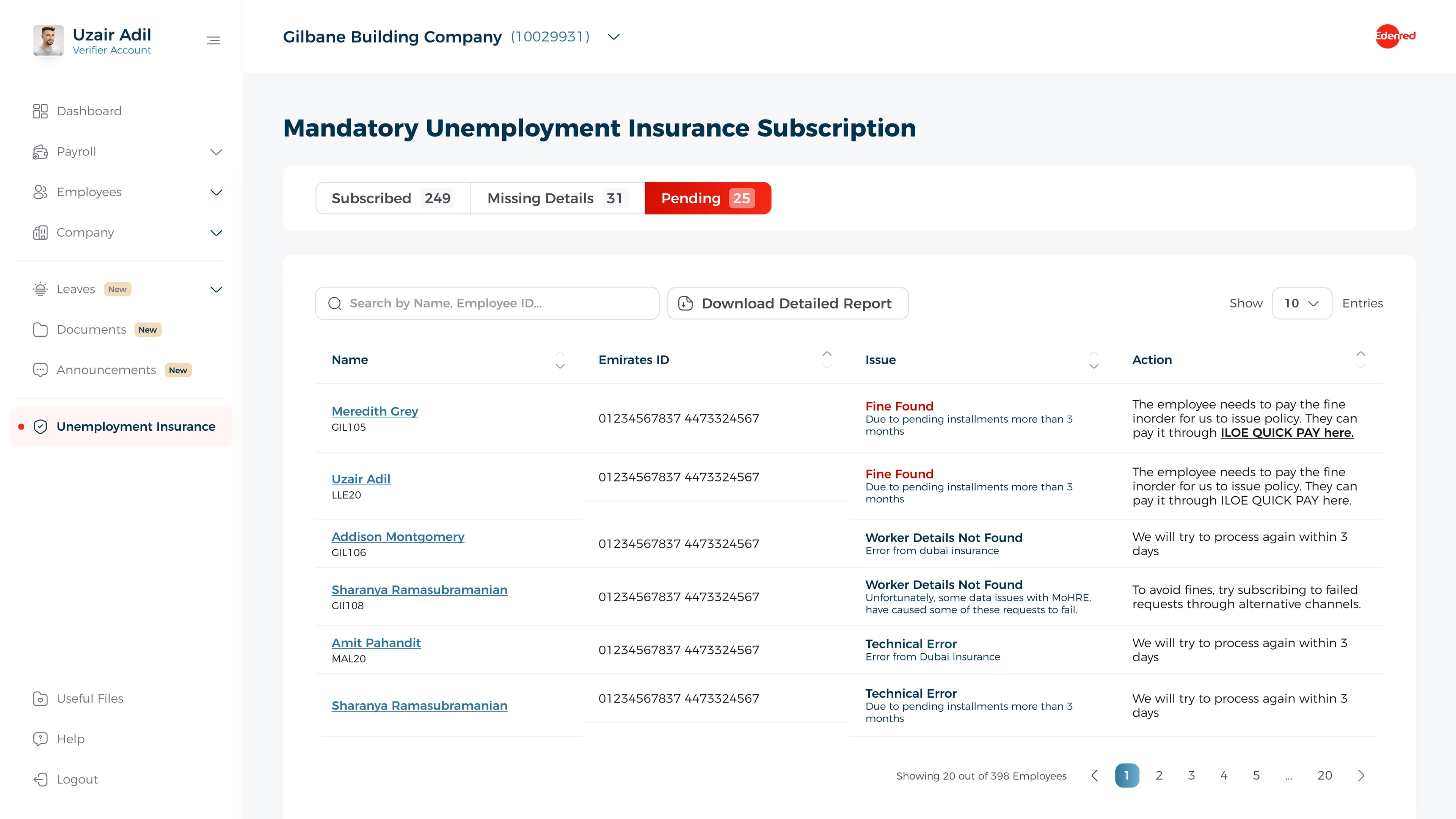
The redesigned ILOE Pending tab — every worker row shows a clear issue and a one-tap action
The redesigned Pending tab — every row now carries a clear reason and a next action.
What is ILOE?

ILOE is the UAE's mandatory unemployment insurance. Every worker must be subscribed — or the government fines them AED 200 to AED 400.

On the C3 portal, employers subscribe and renew ILOE for their entire workforce from one screen — sometimes hundreds of workers at once.

When that screen is unclear, the worker gets fined, the employer gets angry, and it all lands on customer support. This case study is about closing that loop.

🛡️
The mandate
UAE unemployment insurance — legally required
🏢
The users
Employers managing whole workforces
⚠️
The stakes
Miss it and the worker is fined AED 200–400
📞
The reality
Confusion becomes support tickets
−91%
ILOE support queries after the revamp
~50%
of tickets were status / fines confusion
≈0
double debits after the new add flow
90%
reduction goal — beaten
The goal

Reduce ILOE customer-support queries by 90%.

The ILOE section had become the single biggest source of confused tickets in the portal. The mandate was blunt: make it clear enough that clients stop needing to ask. Before touching pixels, I went to the tickets.

1Dig into the tickets

Four months of tickets pointed at two culprits.

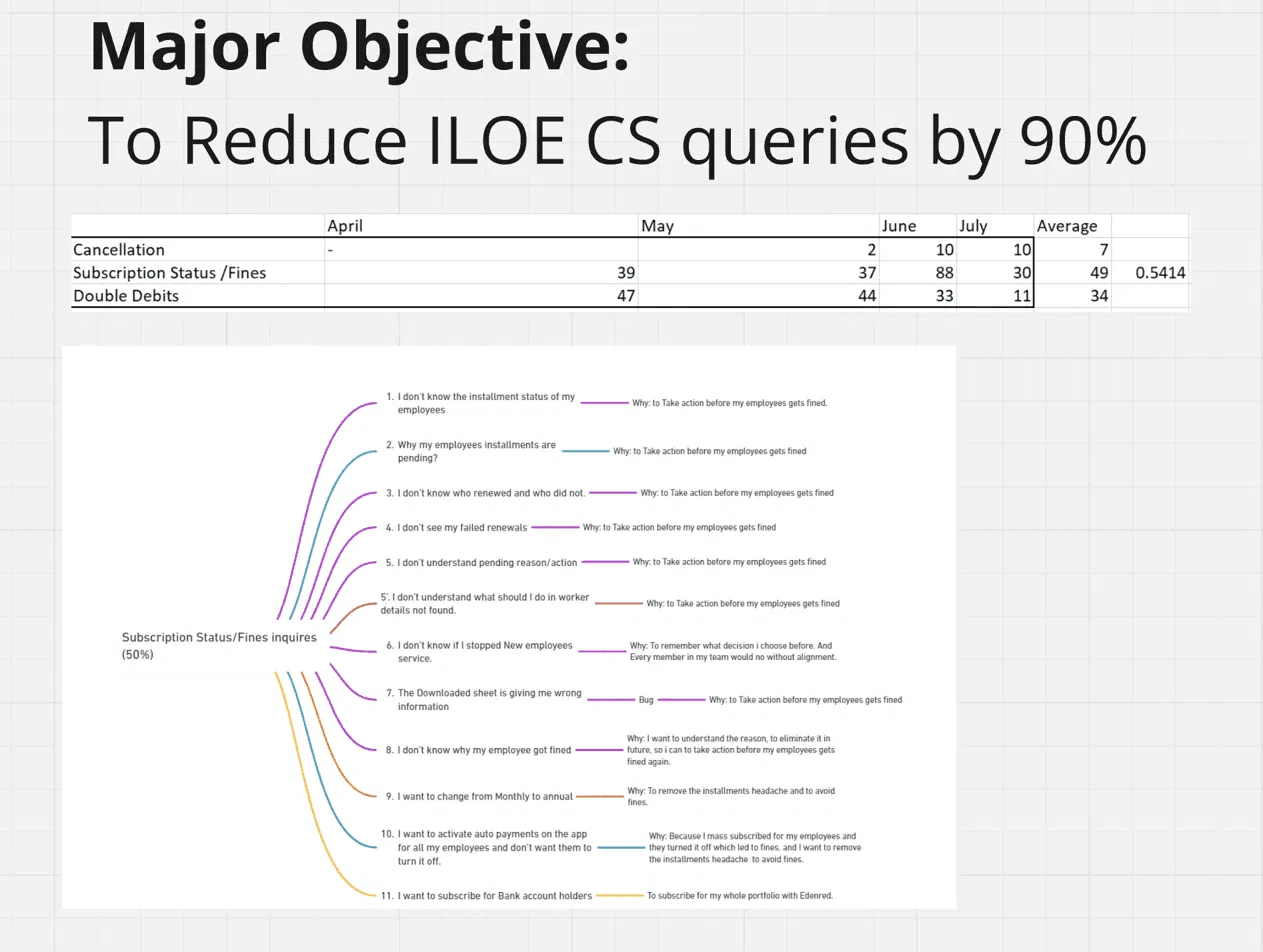
I pulled every ILOE support ticket from April to July and grouped them. Two categories swallowed almost everything: "subscription status & fines" (≈50% of all queries) and "double debits."
49
Subscription status / fines
Avg tickets / month · ~50% of all ILOE queries
34
Double debits
Avg tickets / month · charged twice
7
Cancellations
Avg tickets / month · smaller but noisy
Objective slide — CS query breakdown table by month and an affinity map of 11 recurring client questions
In short — The tickets weren't random. They clustered around not knowing what was going on, and being charged twice for it.
2Understand the painpoints

11 client questions boiled down to two feelings.

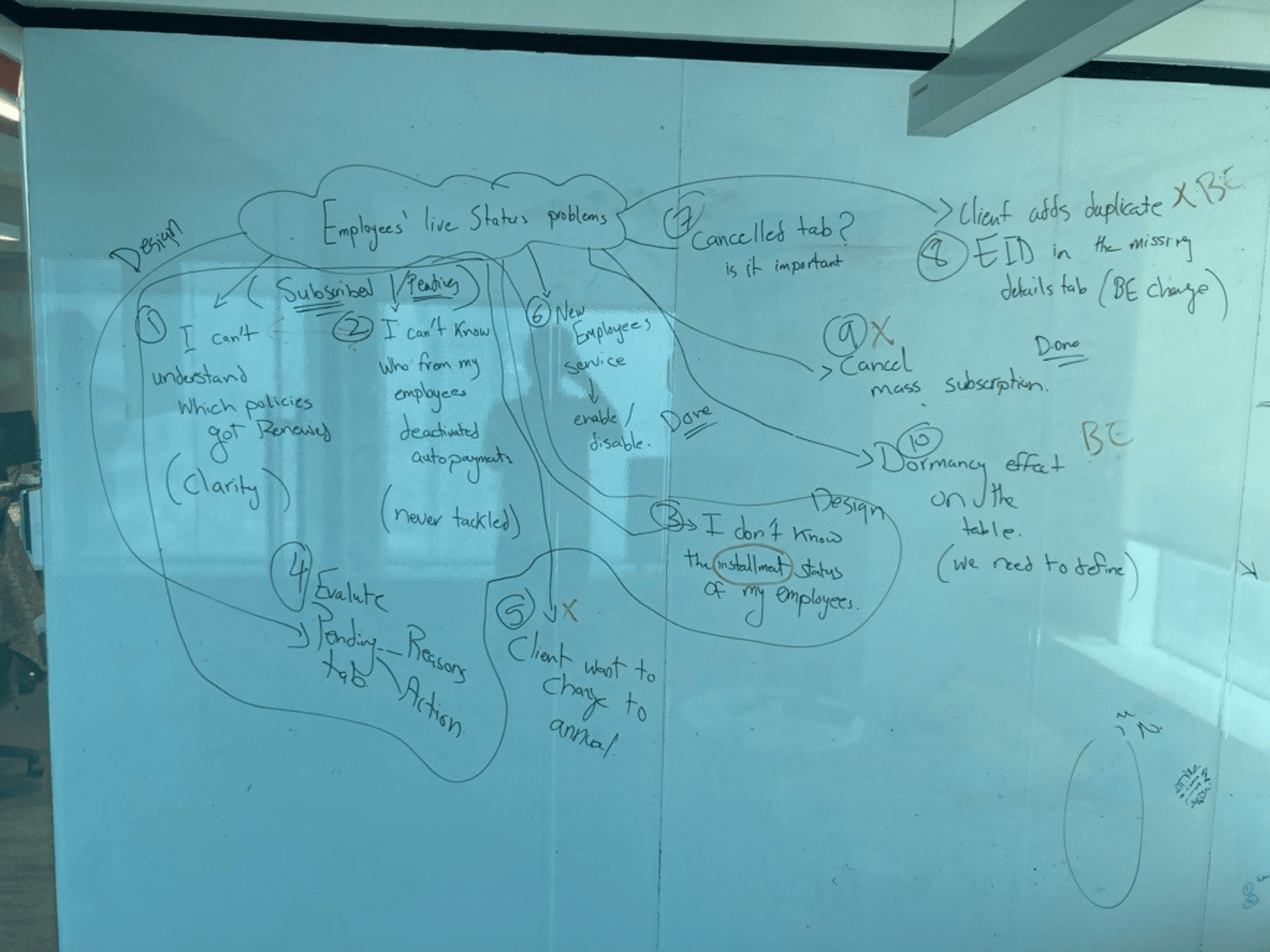
I mapped the 11 recurring questions onto the fine lifecycle with the team. Everything sat on one side of a single moment — the fine — as either an awareness gap or a clarity gap.

BEFORE THE FINE · Awareness

I don't know if my employee is about to be fined.

No installment status, no expiry warning, no heads-up before AED 200–400 hits.

AFTER THE FINE · Clarity

My employee got fined — but I've no idea why or what to do.

The pending tab showed a status with no reason and no next action.
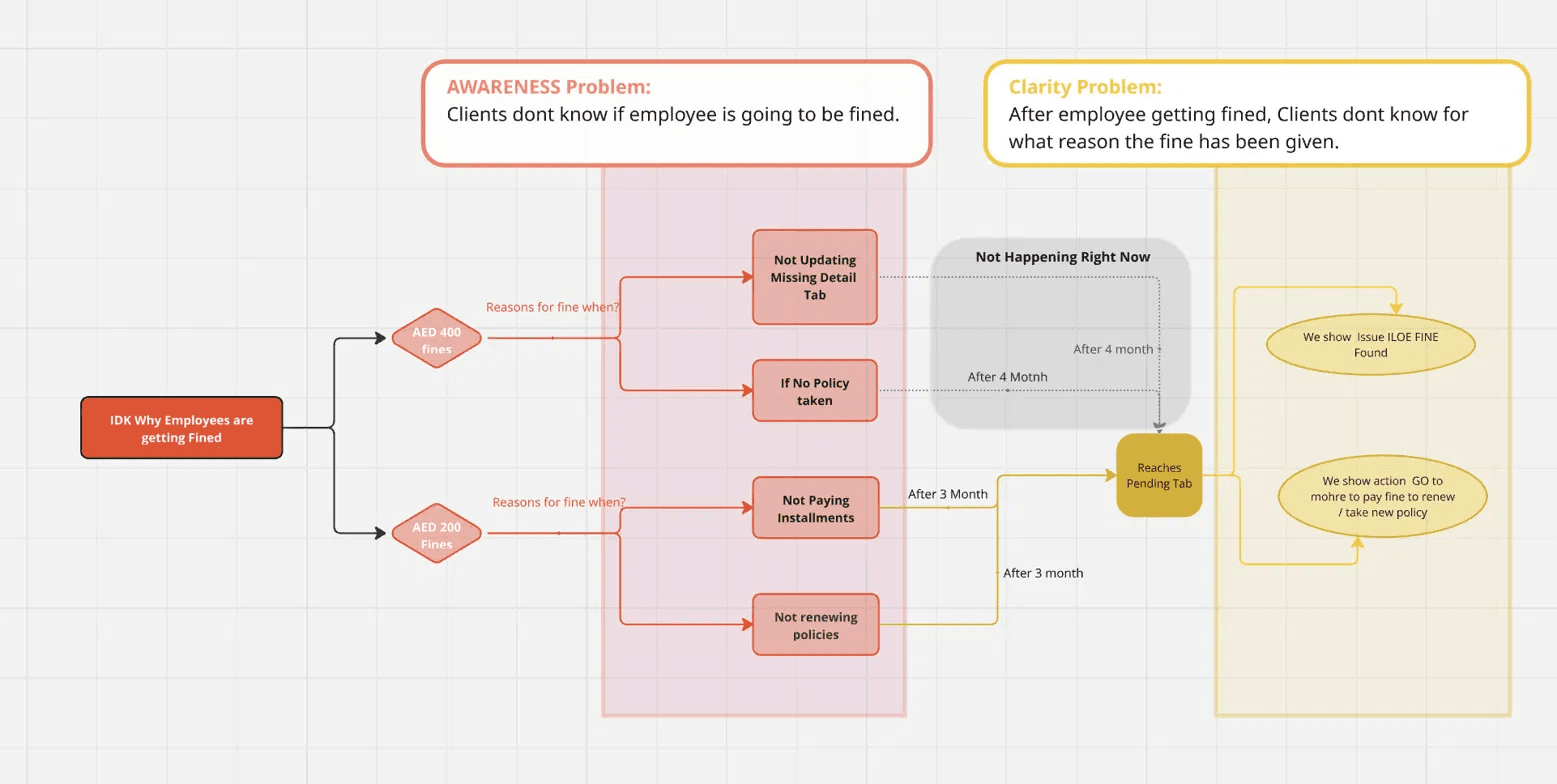
Fine lifecycle flow — awareness problem before the fine, clarity problem after reaching the pending tab
Whiteboard session mapping employees' live-status problems
In short — Clients weren't confused by the fine. They were blind before it and lost after it.
3Now the problem is clear

Four tabs, each hiding the thing clients needed.

I broke the section down tab by tab and tagged each problem P0–P2 with the PM, so we knew exactly what to fix first.

P0Subscribed tab

No installment status — clients couldn't tell who was paid up or who'd get fined next.

P0Pending tab

A raw status with no reason and no action — "pending" told them nothing.

P0Missing Details

Clients added duplicate Emirates IDs, triggering double debits on the same worker.
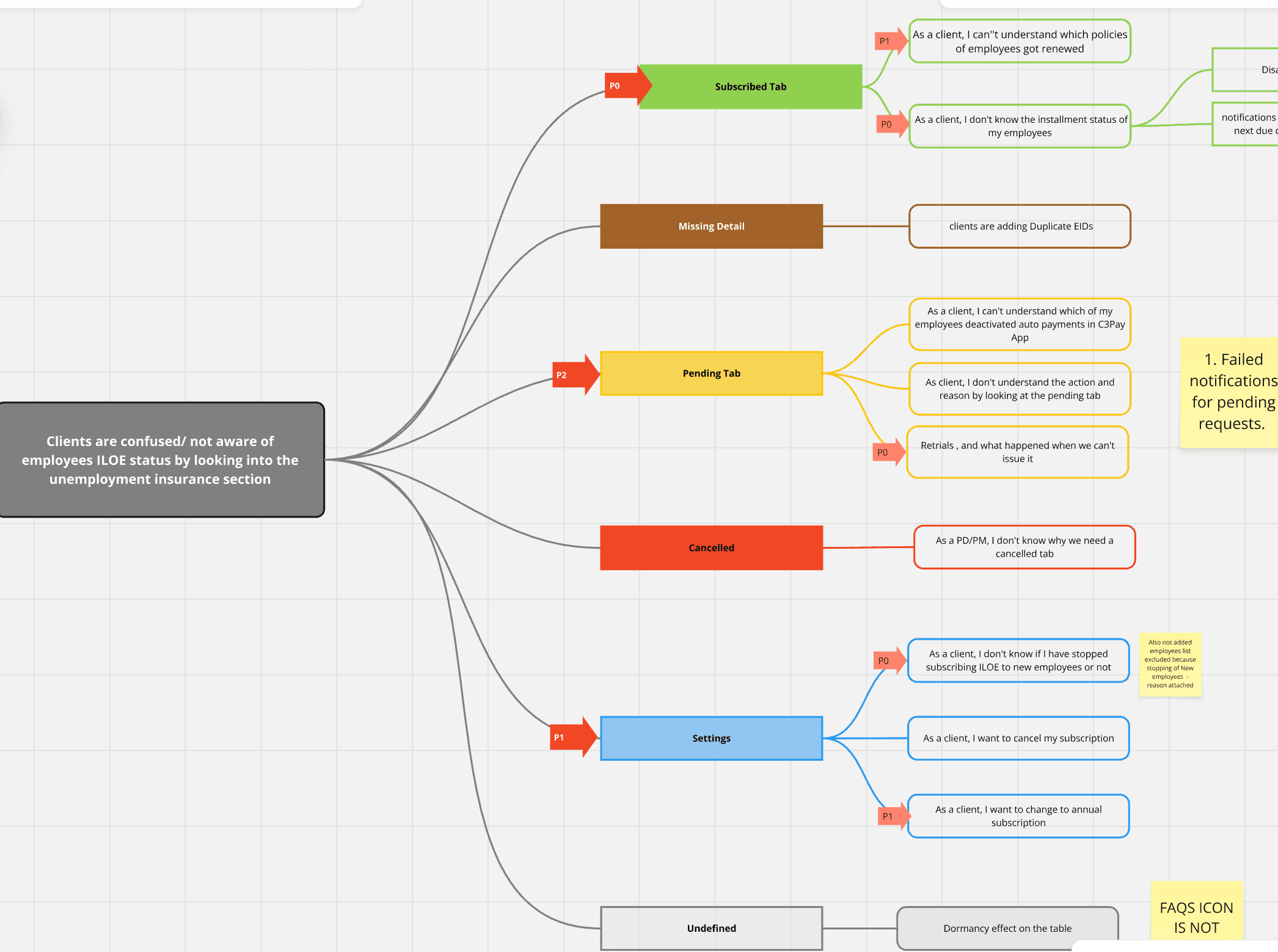
Prioritised problem map — clients confused about ILOE status, broken down by tab with P0/P1/P2 tags
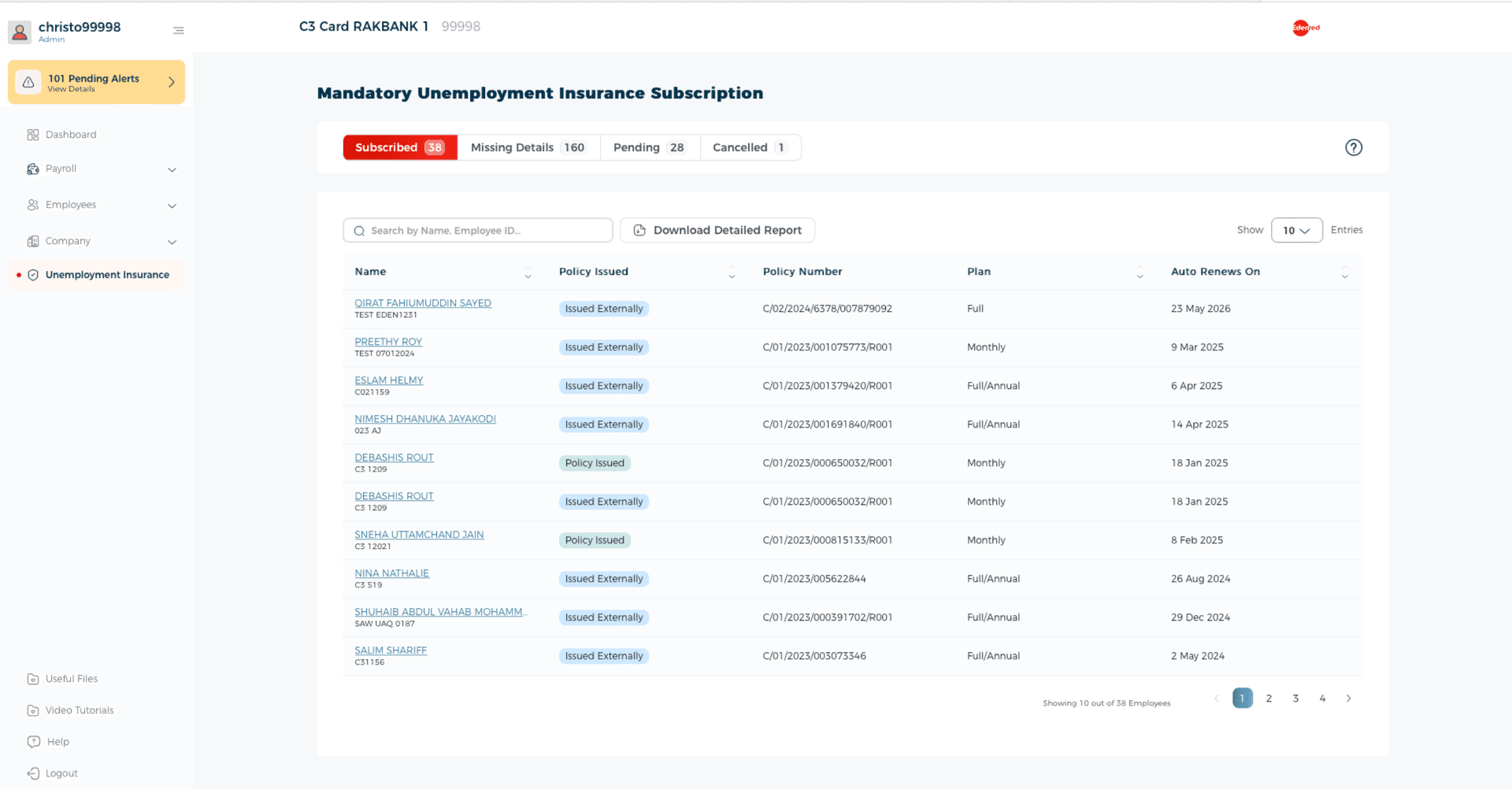
Old Subscribed tab
PROBLEMSubscribedno installment status, so clients can't tell who's about to be fined.
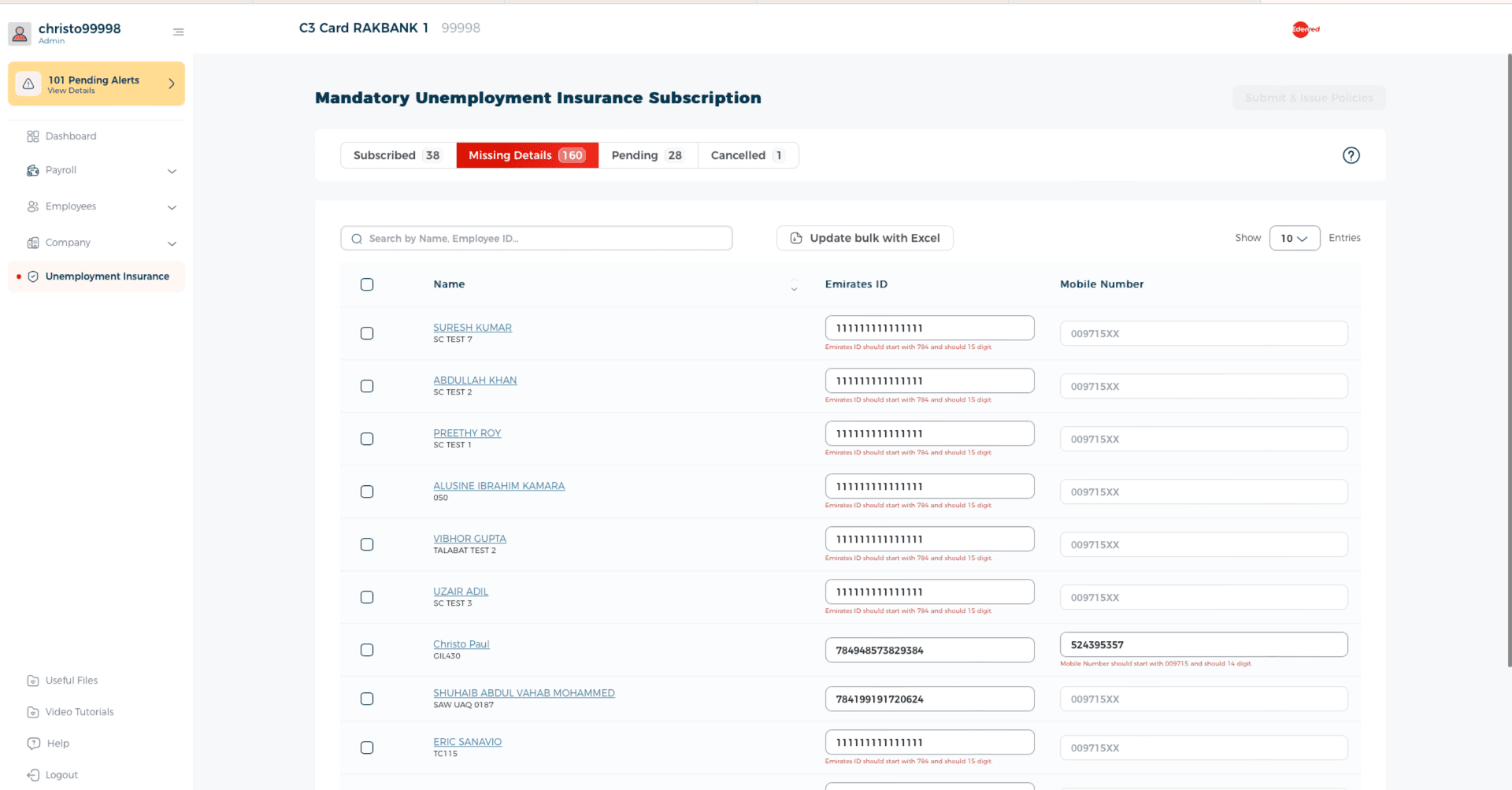
Old Missing Details tab
PROBLEMMissing Detailsduplicate Emirates IDs slip through, so the same worker gets charged twice.
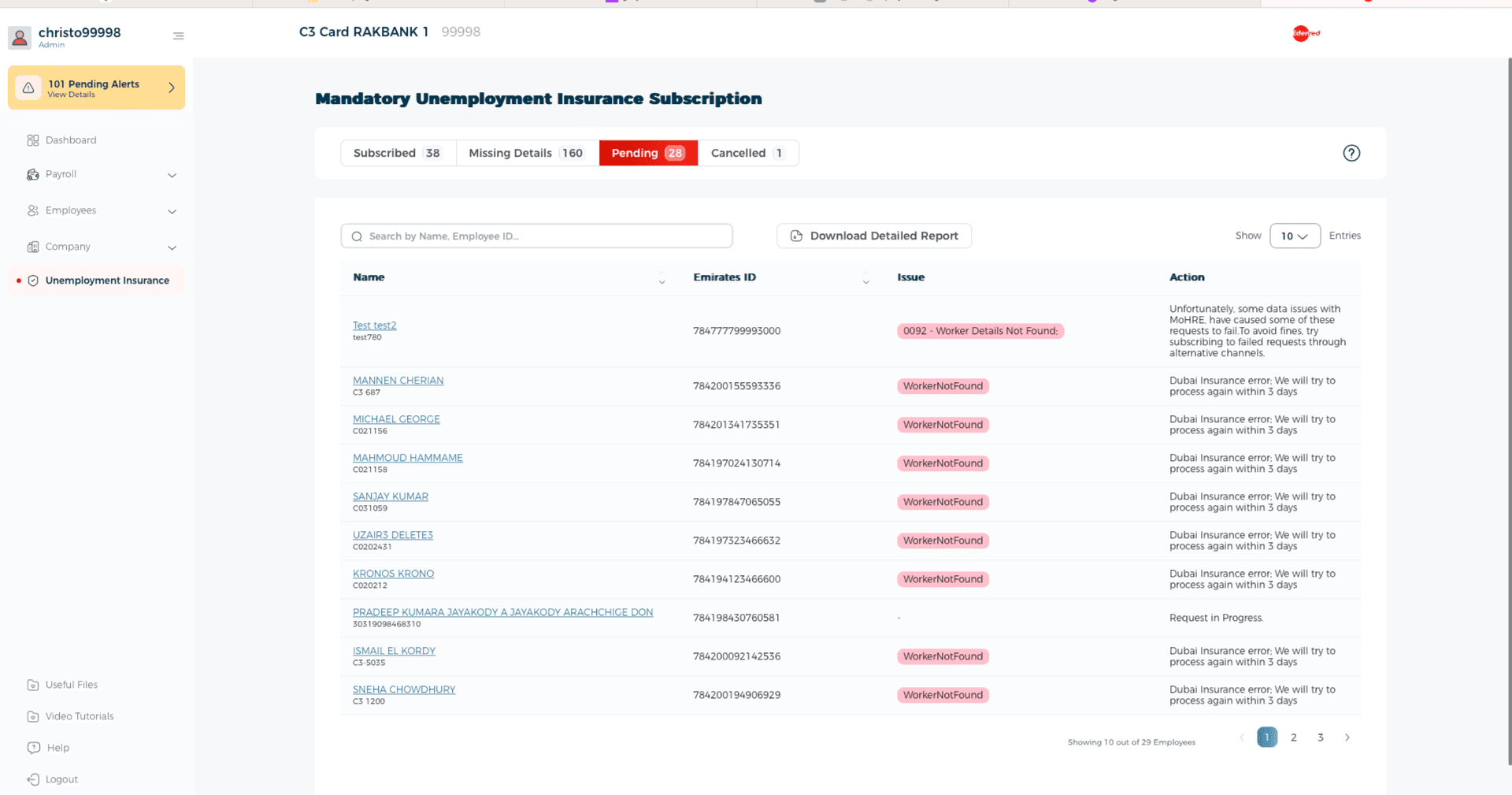
Old Pending tab
PROBLEMPendinga bare status with no reason and no action to take.
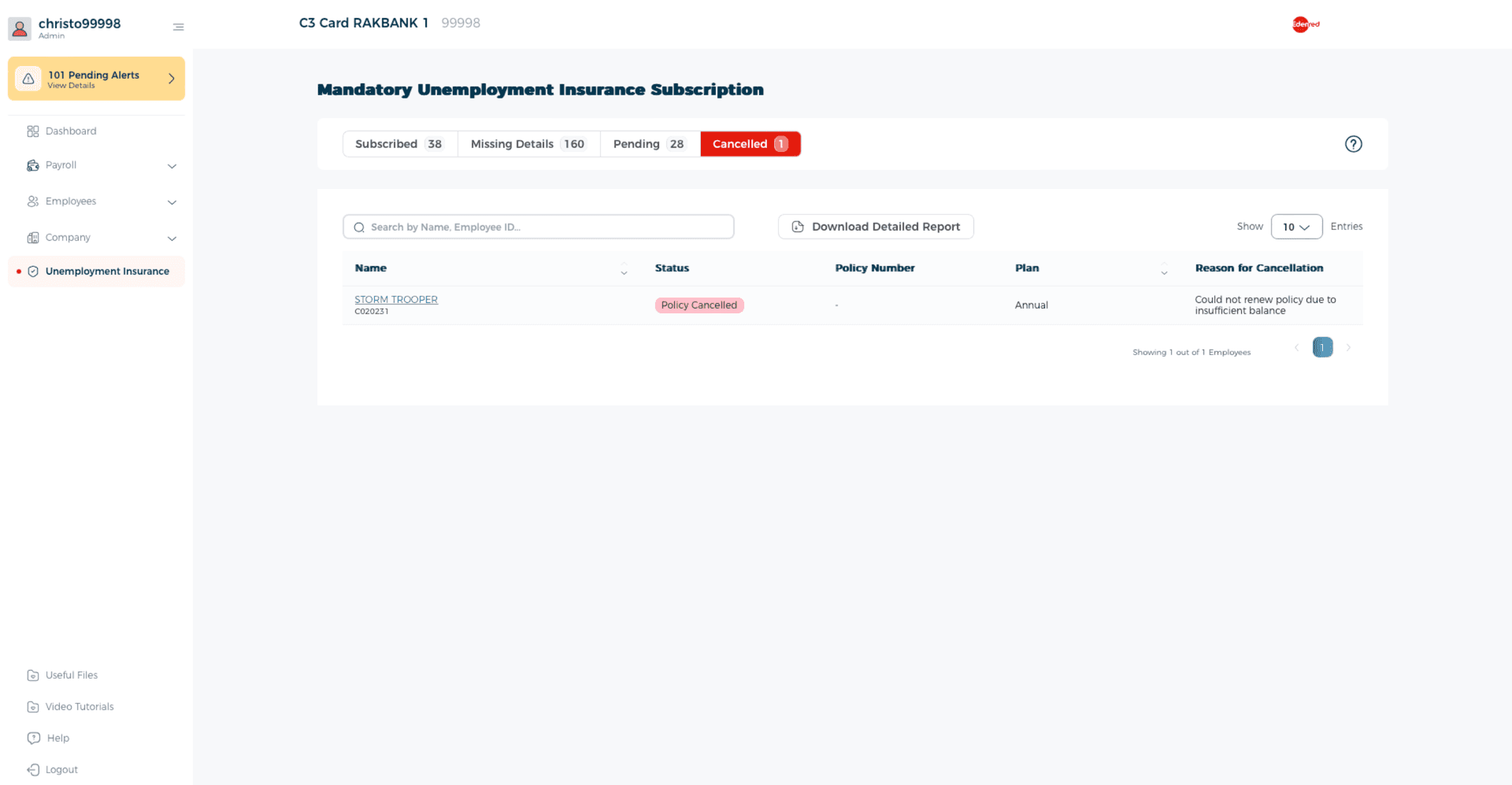
Old Cancelled tab
PROBLEMCancelleda policy vanished here with no explanation of why.
In short — The information clients needed existed — it was just buried, unlabelled, or missing an action.
4Benchmark the competition

How does everyone else show ILOE?

I ran a teardown of Dubai Insurance's ILOE portal and other providers — the same job, solved differently.
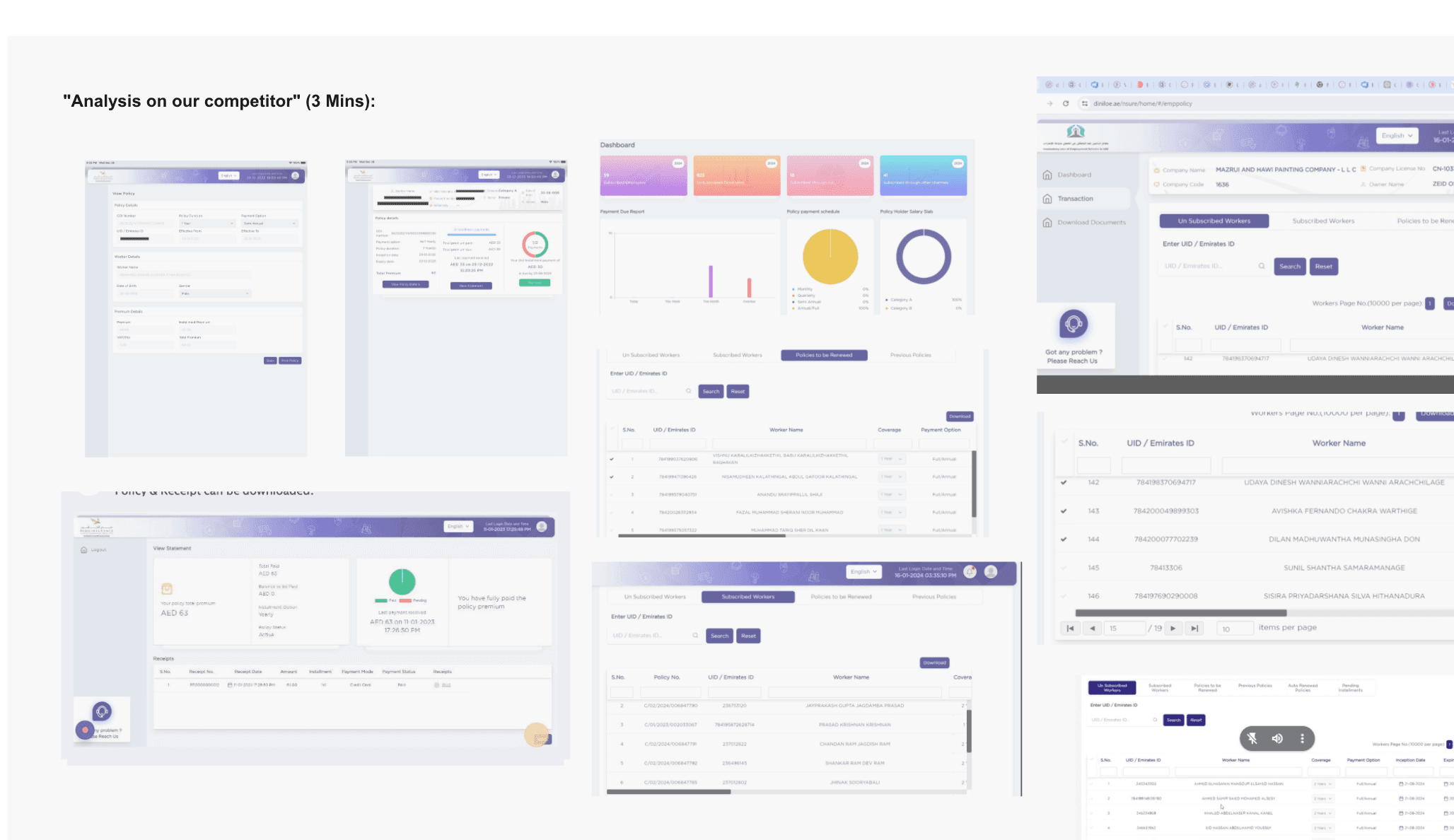
What I borrowed
Lead with status
Subscribed / unsubscribed splits up front.
Summary cards
Active, expiring soon, to-be-fined at a glance.
Money owed, visible
Payment-due reports before the deadline.
Renewal dates surfaced
Policy schedule shown, not hidden.
Competitor teardown — a grid of Dubai Insurance ILOE portal screens
In short — The winners led with status and money owed. Ours led with tabs.
5Ideate & prioritise

The whole team brainstormed. Impact vs effort decided.

I ran a "How might we bring clarity to the pending tab?" session across 13 people — design, product, CS, and engineering — then plotted every idea on an impact/effort matrix and sliced it into three shippable iterations.
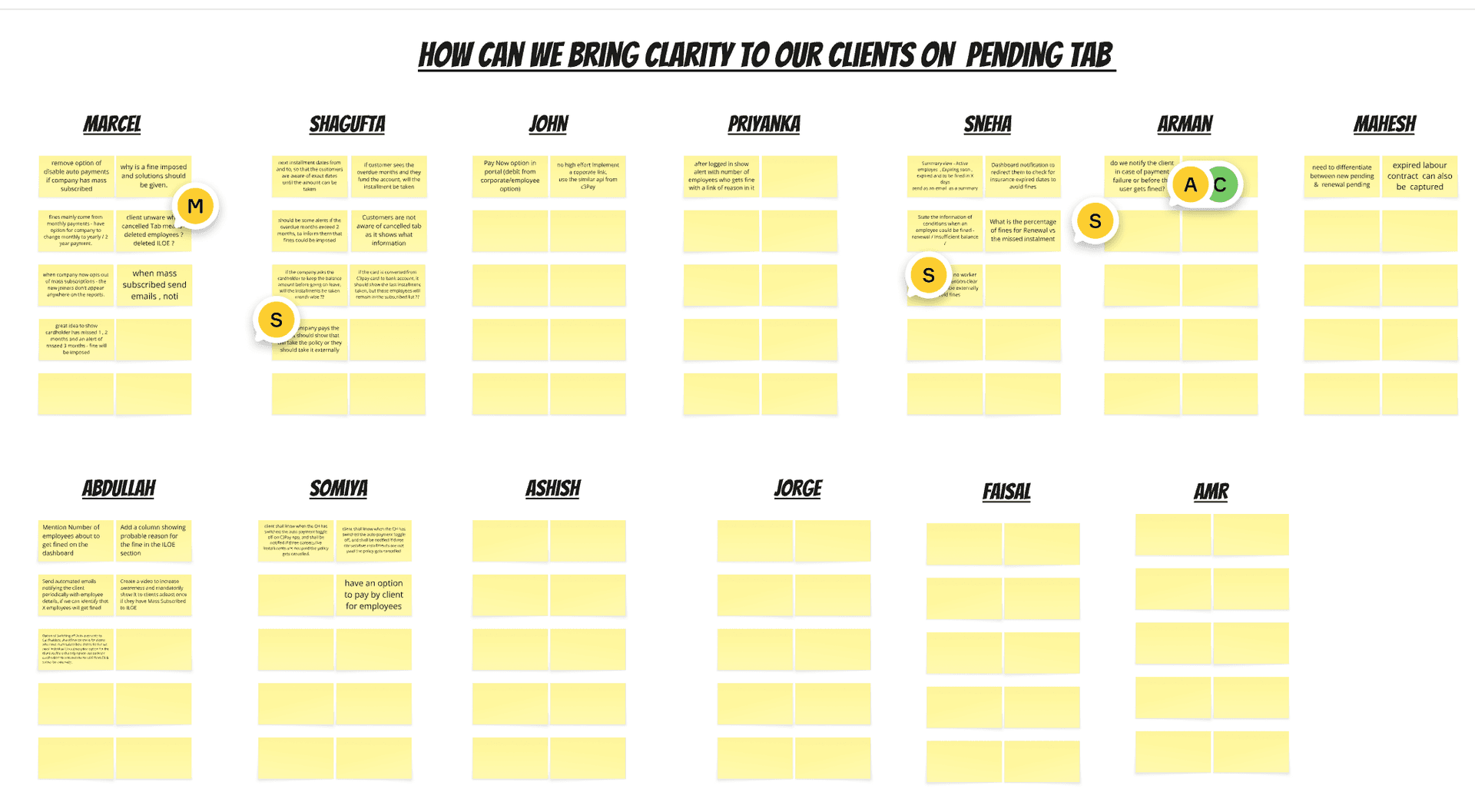
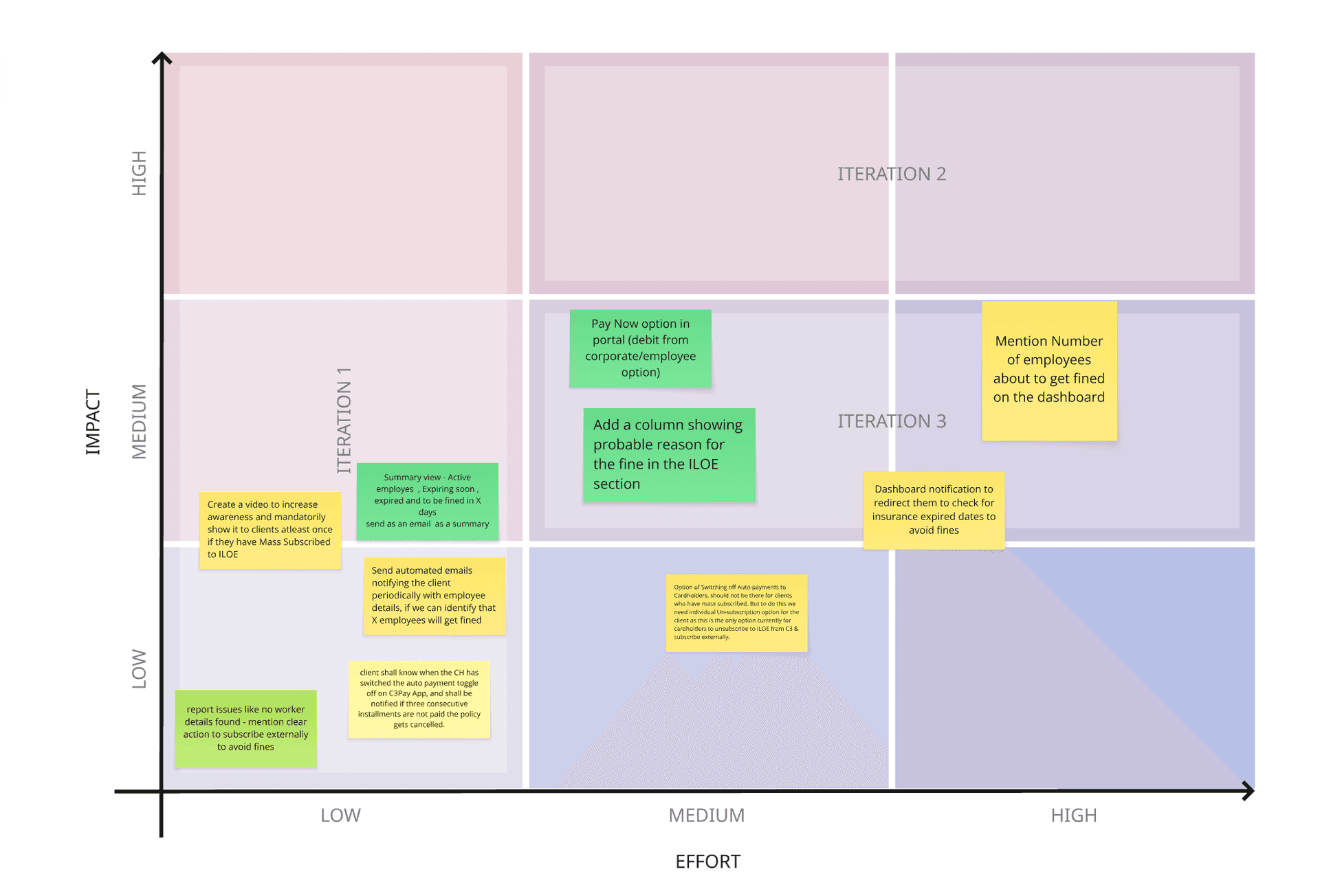
Team brainstorm board — How can we bring clarity to our clients on the pending tab
Impact vs effort matrix — ideas sorted into iteration 1, 2 and 3
Iteration 1 — Clarity
Status summary, clear pending reasons/actions, proactive emails. Low effort, high relief.
Iteration 2 — Action
Actionable pending tab + ILOE Quick Pay to clear fines inline.
Iteration 3 — Prevent
Pay Now, fine-risk counts on the dashboard, expiry notifications.
In short — Big backlog, ruthless order. Ship the clarity wins first, save the heavy backend for later.
6Design the fix

A section that tells you what's wrong — and what to do.

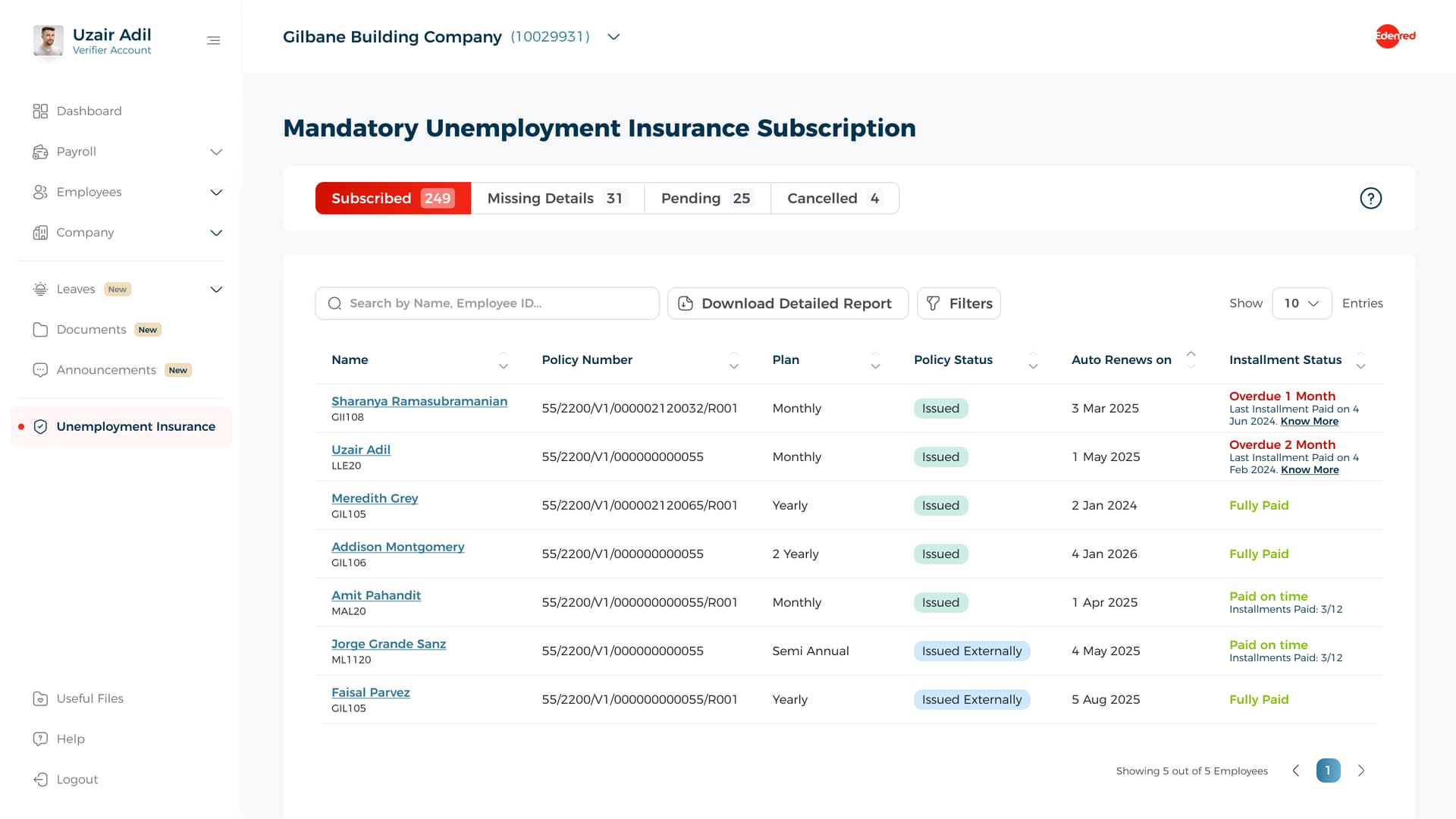
Two moves carried most of the impact: an actionable Pending tab, and installment-status visibility on the Subscribed tab — so clients see trouble coming and know exactly how to clear it.

Feature 01

An actionable Pending tab

Every row now names the exact issue — Fine Found, Worker Details Not Found, Technical Error — and spells out the action. Fines can be cleared inline through ILOE Quick Pay, right where the problem surfaces.
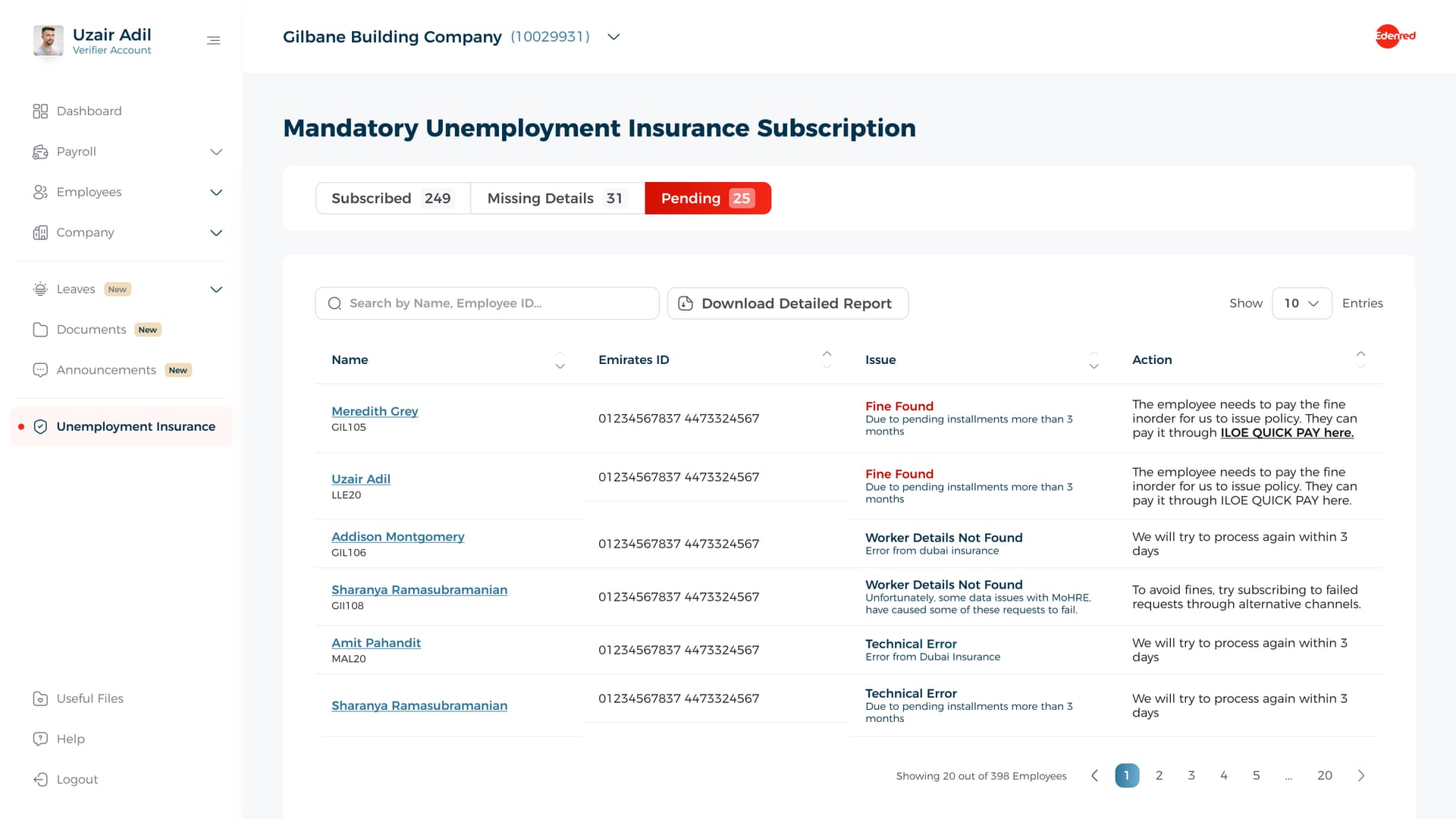
Redesigned Pending tab with clear Issue and Action columns and an inline ILOE Quick Pay link
SOLUTIONEach row now names the Issue and a plain-language Action — with inline ILOE Quick Pay to clear the fine on the spot.
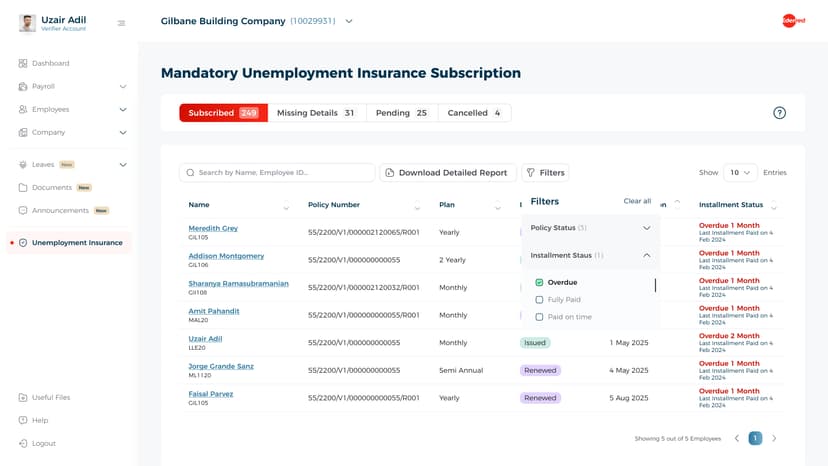
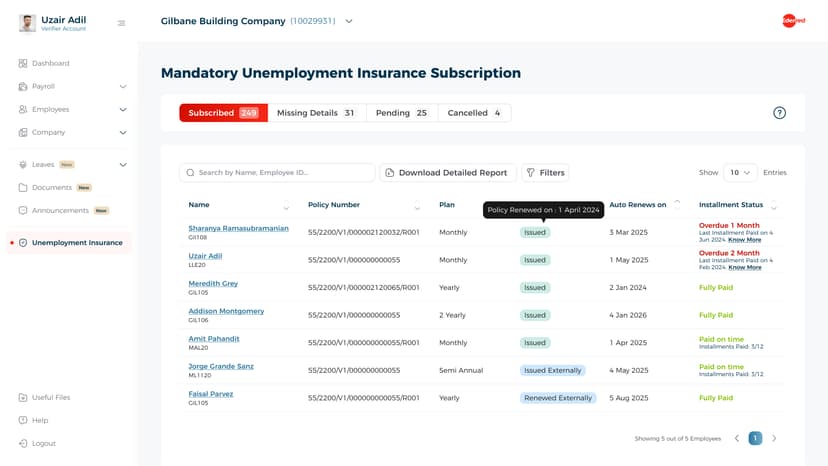
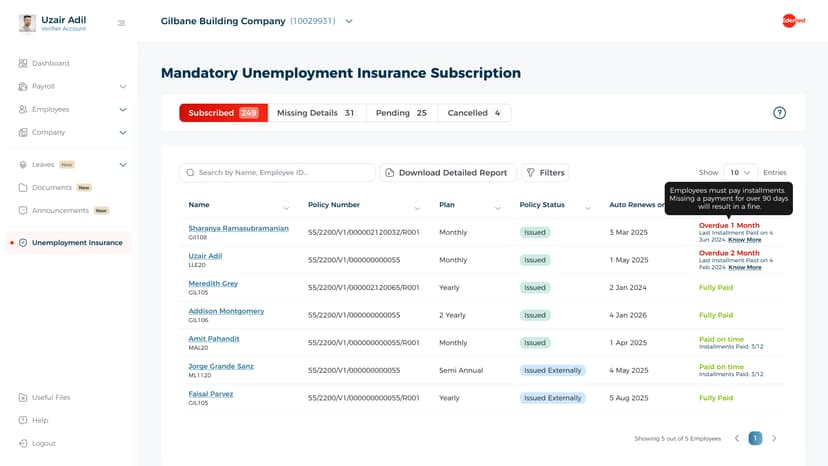
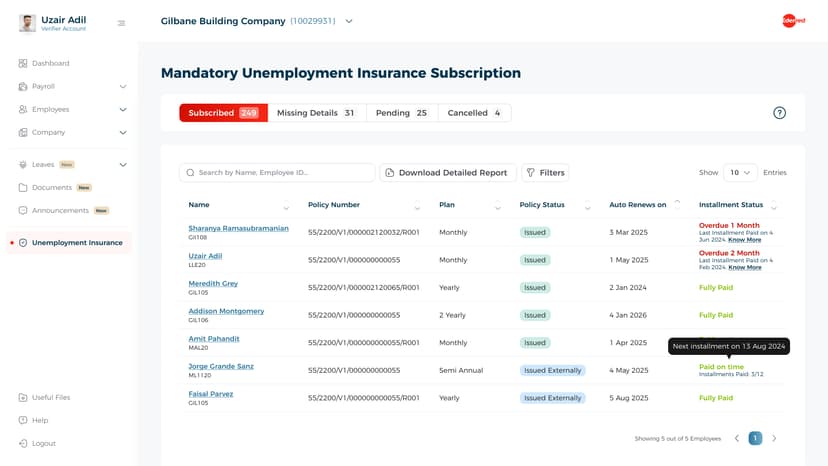
Redesigned Subscribed tab showing Policy Status, Auto-renew date and Installment Status per worker
SOLUTIONNew Policy Status and Installment Status columns flag Overdue in red — before a fine ever lands.
Feature 02

Installment status, in plain sight

The Subscribed tab surfaces Policy Status, Auto-renew date, and a live Installment Status — Fully Paid, Paid on time, or Overdue — with filters and hover tooltips that explain what each state means and when the next payment is due.

Reason + action on every row

Fine Found, Worker Not Found, Technical Error — each with the next step spelled out.

ILOE Quick Pay

Clear a fine inline instead of calling support.

Filters & tooltips

Filter by policy and installment status; tooltips explain each state and due dates.

De-duped add flow

Emirates IDs are validated before submission — the double-debit bug at the source.
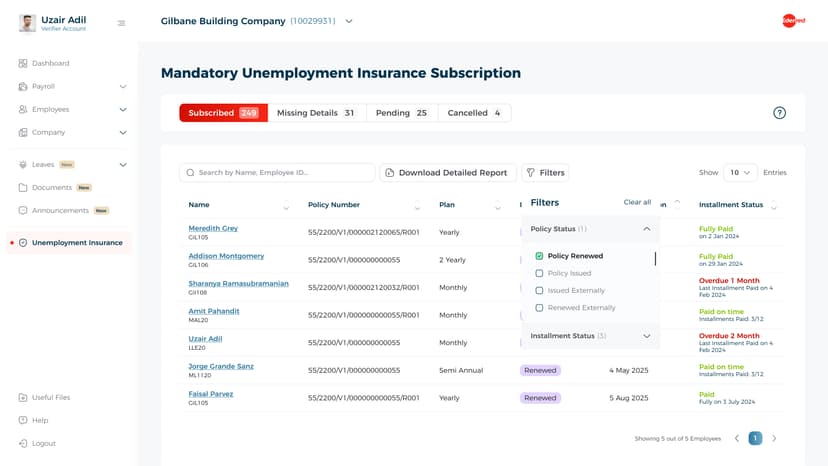
Filters — policy status
Filters — installment status
Policy renewed tooltip
Installment status tooltip
Next installment tooltip
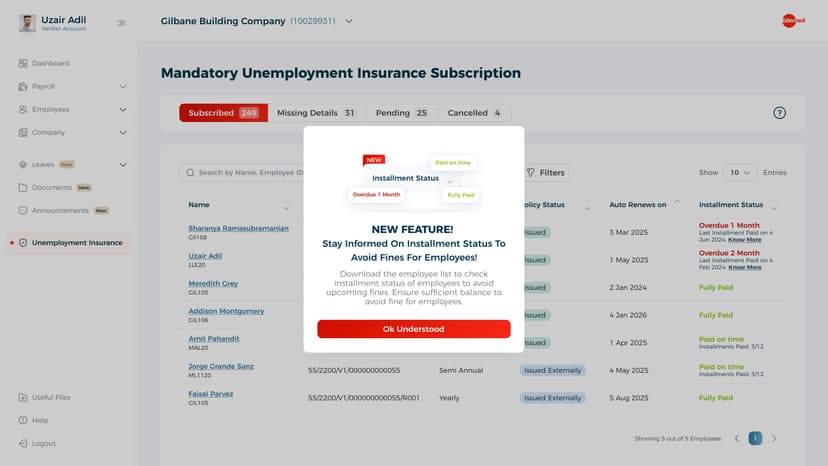
New feature announcement modal
Filters — policy status
Filters — installment status
Policy renewed tooltip
Installment status tooltip
Next installment tooltip
New feature announcement modal
In short — Every pending row now carries a reason and a next step. Every subscribed worker shows whether a fine is coming.
7Ship & measure

Clear section. Quiet support queue.

ILOE support queries dropped 91% after the revamp.

The two categories that once drove half of all tickets — status/fines confusion and double debits — all but disappeared.

★ The impact
−91%
ILOE support queries
≈0
double debits after new add flow
50%
status/fines tickets, once the top driver
90%+
reduction goal beaten

What I'd carry forward.

The biggest lever wasn't a prettier screen — it was reading the support queue as a design brief. Every ticket was a client telling us exactly where the interface failed them.

The 91% figure is measured against the April–July baseline. Iterations 2 and 3 (Pay Now, richer notifications) were still rolling out at the time of writing — more upside to come.